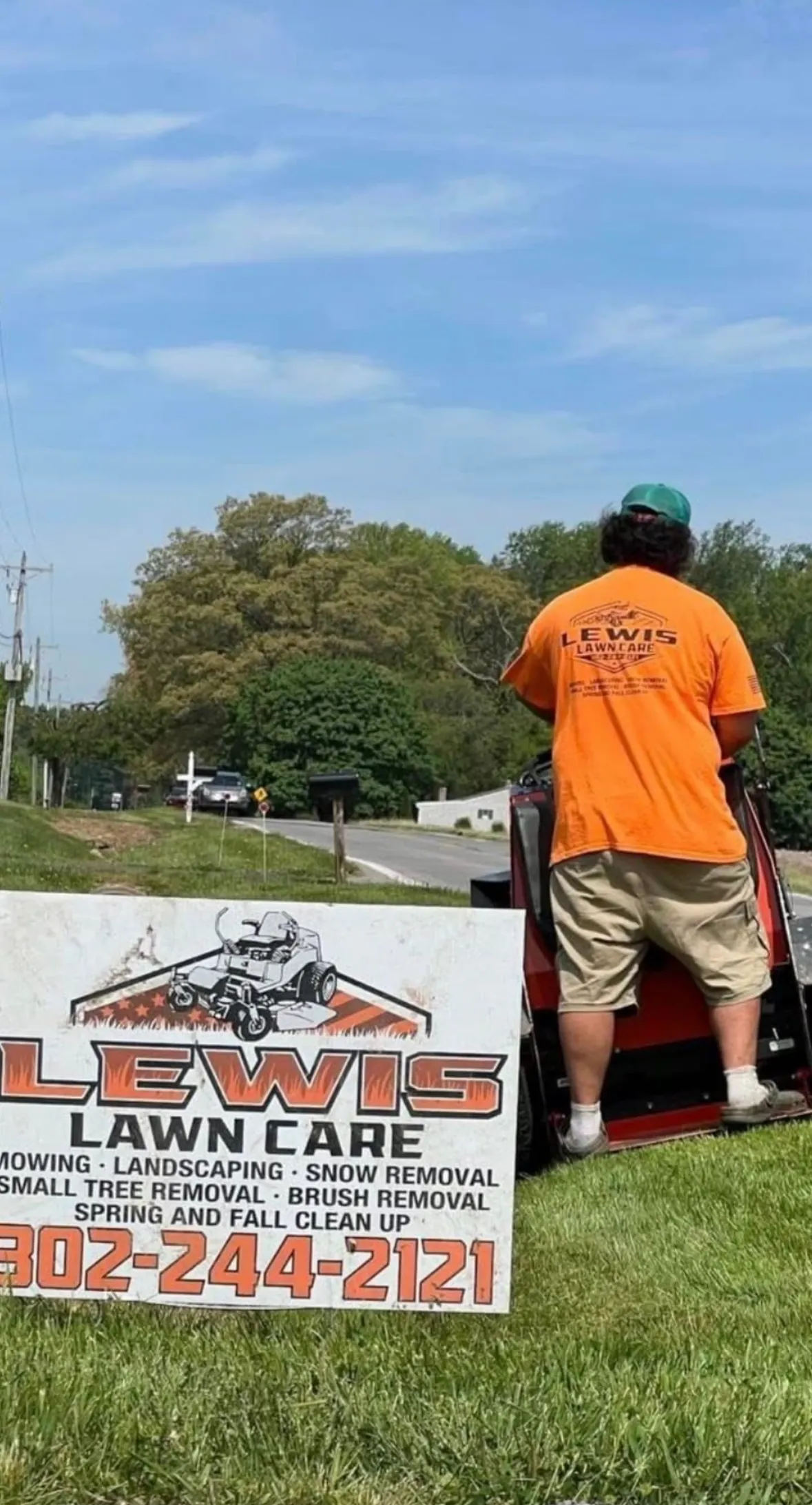
Regular cuts at the right height, clean edges along every walk and bed, and the clippings blown off before we leave.
Get a free estimateTell us your number and we will call you back.
Smyrna and Clayton sit in the northern half of the turfgrass transition zone, and tall fescue is the cool-season grass the University of Delaware recommends first for lawns here. Cool-season grass does most of its growing in spring and fall, so April and May can mean a cut every week, while a dry stretch in July slows it right down. We mow on a schedule that follows the grass instead of the calendar, and we change the deck height with the season instead of leaving it in one spot all year.
Height is where most lawns go wrong. Delaware's Livable Lawns guidance says to take no more than a third of the blade in any one cut and to raise the mowing height to about three and a half inches in July. The University of Delaware advises never going below two and a half to three inches in summer, because taller grass shades the soil and holds on to moisture. Cutting a lawn short to stretch the time between visits works against all of that.
Every visit includes the details that make a lawn look finished. We edge along driveways, walks and curbs, string trim around fences, beds, mailboxes and trees, and blow clippings off the hard surfaces. Clippings on the grass itself can stay, since they break down and return nutrients to the soil. The Livable Lawns program asks homeowners to sweep clippings off sidewalks and driveways to keep them out of runoff, and that is the reason for the blower. Our crew runs a stand-on mower that turns tight around beds and trees.
“Awesome Lawncare company! Precise Everytime!”
In spring and fall, when cool-season grass grows fastest, a lawn here usually needs a cut every week. In a hot, dry summer growth slows and the lawn may go partly dormant, so the schedule can stretch. The rule we hold to is never taking more than a third of the blade at once.
Usually not. Clippings left on the lawn sift down and return nitrogen to the soil, which is what the University of Delaware and the state's Livable Lawns program recommend. We blow them off walks, steps and driveways so nothing gets tracked inside. If the grass got very long between cuts, a second pass may be needed.
Probably not. Cool-season lawns in Delaware often go dormant in the hottest, driest part of summer and green back up once fall rain returns. Mowing high through that stretch helps the grass ride it out. While it is dormant, we cut less often instead of running a mower over brown grass for the sake of the schedule.
Mowing and edging, landscaping and new beds, block retaining walls, decorative stone and mulch, brush removal, and seasonal cleanups. If it's outside, just ask.
Yes. We dig out and level the base, set the block, and backfill so the wall stays straight. Then we can finish the bed with stone, mulch, and plants.
Yes. Snow removal is on our sign right next to mowing and landscaping. We clear driveways, walks and steps after a storm. Call or text (302) 244-2121 before the first snow so we know where you are.
Smyrna and Clayton, plus Cheswold, Kenton, Leipsic, Hartly, Townsend, Odessa and Middletown. If you are a little further out, call or text (302) 244-2121 and ask.
Yes. Small tree removal and brush removal are both on our sign. We cut out small trees, thick brush and vines and haul it all away. A big tree near the house or the power lines is a job for a tree service, and we will tell you if yours is one.
Yes. Clippings, leaves, brush and old mulch leave with us, and we blow off the walks and the driveway before we go.
Yes. We edge play areas with a border and fill them with fresh gravel, like the playset area in our gallery.