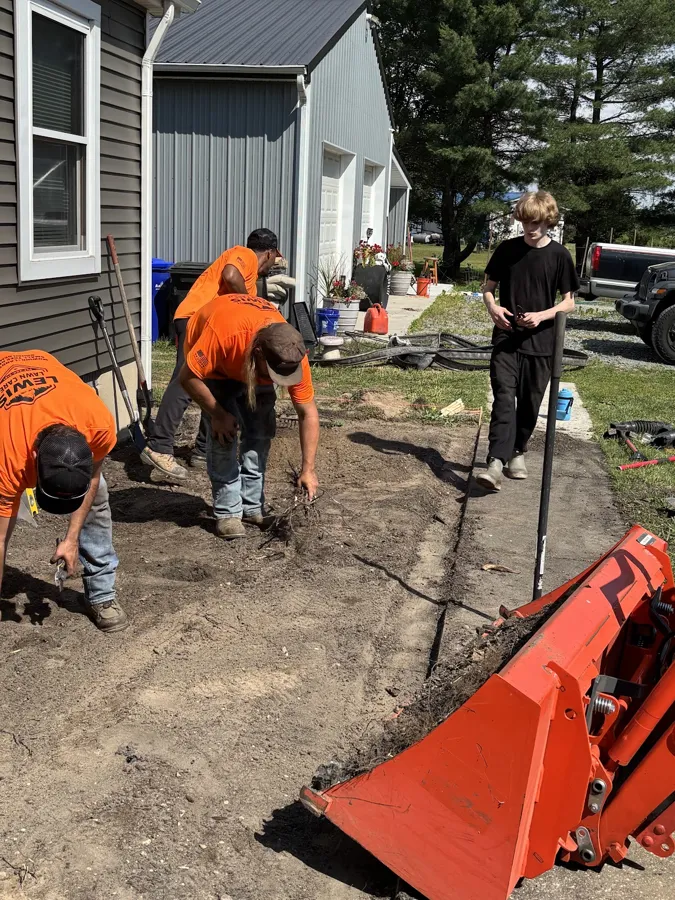
New beds dug and shaped, edges cut clean, shrubs and flowers planted, and tired builder beds cleared out and rebuilt.
Get a free estimateTell us your number and we will call you back.
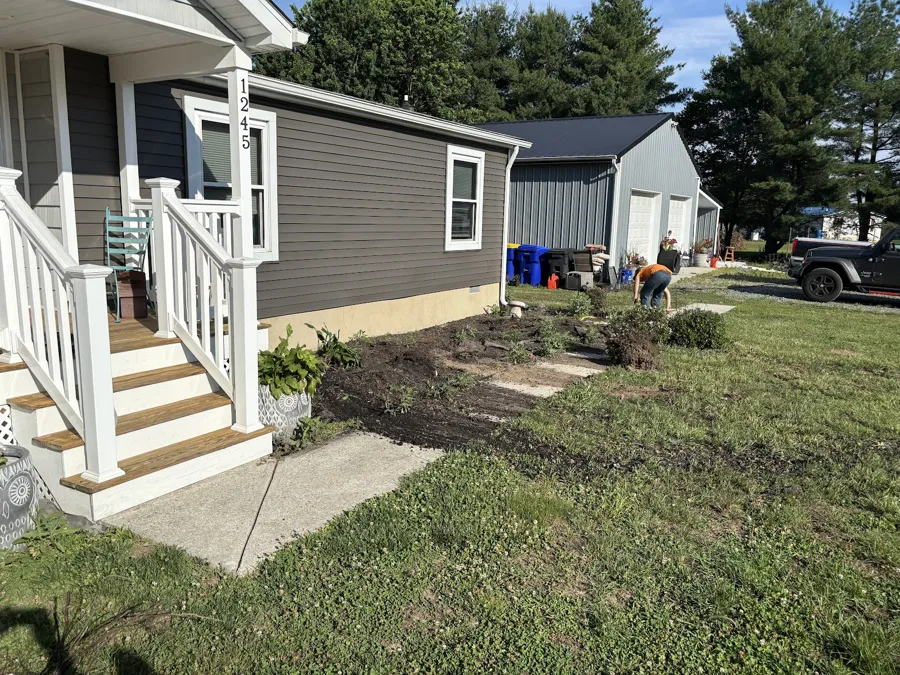
Many houses around Smyrna, Clayton and Middletown went up after 2000, and plenty of them came with the standard builder bed: a narrow strip along the foundation, a few shrubs in a straight row, and a thin coat of mulch over hard ground. By now, shrubs planted that close to the house can crowd the windows, and gaps show where others gave out. We clear out what is not worth keeping, reshape the bed so its lines follow the house and the walk, cut a clean edge, and replant with shrubs and flowers sized for the space.
The soil under a bed matters as much as the plants in it. Soil maps for Smyrna and Clayton show mostly Downer sandy loam, a well-drained Coastal Plain soil, and the University of Delaware notes that organic matter helps sandy soil hold water. Around newer houses there is a second problem: ground gets compacted during construction, and roots struggle to push through it. So we loosen the bed, work compost in before anything goes in the hole, and stay off the beds when the soil is soaking wet, since wet soil packs down the easiest.
Timing gives new plants a head start. The University of Delaware suggests planting in early spring or late fall, so roots settle in with the rain before the hot, dry part of summer, and the state's Livable Lawns calendar marks September for planting shrubs and perennials. Once they are in the ground, new shrubs want a thorough soaking about once a week through the summer. We also steer away from plants on Delaware's invasive plant list, like English ivy and Callery pear, when we choose what goes in.
Early spring and fall are the strongest windows here. Plants set out then get steady rain while their roots grow, before summer heat arrives. Summer planting can work, but the new plants need regular watering to make it. We can dig and shape a bed any time the ground is workable and plant when the timing is right.
Yes. If a shrub is healthy and fits its space, it stays and the new bed is designed around it. Overgrown or dead plants come out, and the bed is reshaped and replanted around the keepers. We go over the bed with you first and agree on what stays before any digging starts.
Yes. Most new beds are finished with a layer of mulch, or with decorative stone and a block border, which is part of our stone and mulch work. Both can go on the same estimate, so the bed is planted and finished as one job instead of two.
Mowing and edging, landscaping and new beds, block retaining walls, decorative stone and mulch, brush removal, and seasonal cleanups. If it's outside, just ask.
Yes. We dig out and level the base, set the block, and backfill so the wall stays straight. Then we can finish the bed with stone, mulch, and plants.
Yes. Snow removal is on our sign right next to mowing and landscaping. We clear driveways, walks and steps after a storm. Call or text (302) 244-2121 before the first snow so we know where you are.
Smyrna and Clayton, plus Cheswold, Kenton, Leipsic, Hartly, Townsend, Odessa and Middletown. If you are a little further out, call or text (302) 244-2121 and ask.
Yes. Small tree removal and brush removal are both on our sign. We cut out small trees, thick brush and vines and haul it all away. A big tree near the house or the power lines is a job for a tree service, and we will tell you if yours is one.
Yes. Clippings, leaves, brush and old mulch leave with us, and we blow off the walks and the driveway before we go.
Yes. We edge play areas with a border and fill them with fresh gravel, like the playset area in our gallery.